PARENTING

NO MORE TIME-OUTS @ mindful parenting

ow do some parents get it ‘right’, their kids don’t throw tantrums and they seem to have the best bond, is it just about having an easy kid or good luck? I want to share MY RECIPE OF SUCCESS which involves ZERO TIME-OUTS. Put in simple words it is called MINDFUL DISCIPLINE. I want you to know that this works with difficult kids, special needs’ kids, bad kids and easy kids. It is applicable to EVERY and ANY situation in your life with your child. It will MASSIVELY improve your relationship with your child, reduce your stress and improve your health all at the same time. It is easy and doesn’t require you to have any special training besides the WILLINGNESS to do it. It depends on how badly you want your relationship with your child to improve.

SUCCESS 1: No Time-Outs. You might think I am crazy, the whole world uses Time out! But that’s why the whole world is stressed and enrolled in Parenting groups ;) I want you to introspect. What is the purpose of punishment, disciplining or time outs? You want your child to learn something and stop repeating mistakes or wrong behaviour. Have your time outs done that so far? Time outs only  make children more ignored and more angry. The aim of a discipline is to calm a child and teach them a good lesson, time outs just don’t do that! How would we feel if our family members told us to sit away for 10 mins while either one or many people know that we are in time out. The emotion associated with it is feeling ignored, left out or ashamed. We want to teach kids in a POSITIVE way, not with NEGATIVE or ANY FORCEFUL FEELINGS.

SUCCESS 2: Acknowledge the child’s feelings before you do anything else. “I see how upset you are, how angry you feel. I am feeling angry too”. It is wonderful to show children that it is okay to feel negative emotions and that doesn’t make them negative. Emotions are not negative, actions are. Hence, if you want your child to regulate their anger, 1st teach them to RECOGNIZE those emotions at a go! It is almost like teaching a child to tell you when they are hungry. We are creating AWARENESS here and helping them connect to their inner self.

SUCCESS 3: Model. You cannot teach a child to calm down by screaming at them. They learn more by seeing than by hearing you. If you are pointing fingers and blazing eyes at them, you are TRIGGERING them more and more. If on the opposite you come from a NON-THREATENING STANCE – looking into their eyes with care and just silence and patience, you will get immediate positive results because that breaks down their WALL OF DEFENSE in an instant!

SUCCESS 4: DON’T RAISE YOUR VOICE if you don’t want them to. DON’T Threaten, judge, criticize or reject. Instead, CLEARLY TELL THEM WHAT YOU WANT THEM TO DO- “I want you to pick up your shoes and put them where they belong. I want you to do that every day on your own as soon as you come home from school. I may remind me once or twice until it becomes your habit. If I continue to see you ignore this, you may help me clean all of our shoes”. Did you see how simple this is. Instead of saying “How many times have I told you to keep your shoes in your spot, you just increase my work and are lazy!”If you were a child, which one will make you want to co-operate and change your behavior?

SUCCESS 5: Create productive solutions before hand for the child. May be a chart to remember that when we get angry, our body feels charged up, our hands feel more pressure and heart feels more aggression. To remove that aggression or to calm it down we can either punch pillows, go to our silent, safe spot, talk to our soft toy or use a stress ball. There are tons of wonderful instruments one can use like STRESS BALLS, SOFT TOY PUPPETS, PILLOWS, PUNCHING BAGS, SOOTHING PLANTS, etc to calm one down. Again, if you model that, they will pick it up without you having to TRY TRY and TRY.

SUCCESS 6: Stop judging and blaming your child and even yourself. Saying that “You are doing this wrong and you always do it and blah blah…” doesn’t help anyone. It only makes the child feel horrible, more angry, more defensive and it makes you more and more distant from your child. Creating a BOND IS SO CRUCIAL because in moments of distress, the bond that was built in good times will keep you and your child united. How much does your child trust you, how connected are you with your kids, is there an unshakable bond where NO ONE FEELS CRITICIZED, REJECTED and JUDGED. If so, you have learnt the most important lesson of parenting and life!

SUCCESS 7: Stop reading more and more articles and start applying the basic rules: SHOW LOVE, SHOW CARE and APPRECIATION with words, quality time, not with toys and expensive holidays. LOOK INTO THEIR EYES with genuine support at their physical level instead of standing tall and threatening them. Find solutions, not a way to blame and remove your frustration in some other healthy ways.There is a lot more I can talk about but I want to keep it as short and as simple as possible. Hope this helps. Please share your views and feel free to write me your troubles in parenting. What bothers you, what is hard about your parenting journey, how can I help you make it easier?#LoveHeals

Standard
PARENTING

25 Awesome Cartoons / pop culture for your kids – The no guilt zone

I am not the mom who hands my daughter an i-pad or phone but neither am I the mom who is the bandit queen against T.V.

In this tech. world, T.V. is more of a companion than a luxury ;) Today I want to share with you some amazing T.V. ‘pop culture’ for your toddlers and school age kids. These shows will teach your kids tons of great values and traits and so my dear moms, no more feeling guilty zone. Of course, don’t go over board with T.V. time and definitely do not use T.V. to ‘escape’ your tantrum and dealing with theirs. Neither should it be a substitute to self-worth or time spent with them. So, as long as she is watching from far, is not emotionally ‘married’ to the T.V. and has her time-limits each day, I am fine.

Living in U.S.A., in demanding life-situations I find it happiness to have T.V.  and believe that if the choices are right, it does little harm. Neither do I want her to feel outcasted from the world. We do not have cable and we  don’t go to theaters to watch movies and she doesn’t watch movies at home too. In her 6 years, these are the shows she has watched. Mind you, no shows with violence, hatred, fashion, comparisons, etc. And these are her choices, not me having to ‘force’ them to her. Neither is she the mickey, barbie, krishna, hanuman or princess girl. She watches almost nothing with violence, even if it was religious and so I pretty proud of what I am about to share.

ELMO: Teaches about the world around us. Science, G.K., singing, communication.


BARNEY: Excellent program with endless episodes. Great for singing, dancing, TEAM WORK, MORAL VALUES, Imagination. Just super!!


BO ON THE GO: Problem-solving, creativity, perseverance
CLIFFORD: Love for dogs / animals / pet care, values of compassion, love, kindness, sharing and day to day living with grace
DORA THE EXPLORER: Moral values, problem solving and critical thinking, imagination and love for animals. Not as realistic as program as Clifford but yet teaches a lot.
GO DIEGO GO: Excellent program for teaching LOVE for animals and different types of animals, their habitats, etc. Diego is all centered around rescuing animals and goes into the details of their living, features, etc., all in a fun way. It teaches bravery, problem solving in an imaginary (unrealistic) way but my daughter truly started loving animals from this program. I am so grateful!
DINOSAUR TRAIN: I just love this program. Teaches family values deeply and also all about dinosaurs and how to have fun with curiosity. Dinosaurs go on ‘educational adventures’ and learn from each other. I myself learnt a lot from this program, including ANTHROPOLOGY basics ;).
CURIOUS GEORGE: Goes on Adventures. Highlights – Science, G.K., curiosity, love to learn and explore. Great program
THOMAS: Trains, values of togetherness, being  helpful, generous, team-work, etc. Who said girls don’t like trains. In one of her life phases, she has watched THOMAS over and over and played with Thomas tracks for months!
SUPER WHY: Stories, exploration, spelling, reading, team-work, critical thinking and problem-solving. All in one makes a great package.
BUBBLE GUPPIES: Underwater adventures for learning, team-work, moral values
DRAGON TALES: As good as barney, here a team of dragons teach each other core life values. Elder dragons equip younger ones with wisdom and core skills to solve problems. The realities of life are brought about where we argue, get frustrated and then learn to solve them amiably. Love this program too.
JUSTIN TIME: Imagination, discovery, curiosity, world around us, team work, HISTORY, science
LITTLE EINSTEINS: Scientific adventures, G.K., problem solving, team work, music, dividing work and recognizing each other’s talents.
SPECIAL AGENT OSO: Basic problem solving skills. Not too realistic though.
PAW PATROL: Dogs, animals, team work, rescue teams, day to day problem solving, courage, perseverance
SID THE SCIENCE KID: All about science in the very real sense. It makes us think of the smallest details of the workings of the world. I have never challenged or encourage my daughter to be so curious of the world around us. Too awesome a program to miss.
 

PUFFIN ROCK: Family values, moral values, independence, problem-solving


SOPHIA THE FIRST: I thought this would be all about princesses. But this is all about such awesome values, patience, unconditional love that sophia has and teaches everyone around her. I wish I could ever make a gentle, loving program like this one. Her personality is what we MUST MUST MUST show and teach our kids. Emotional expression, maturity, wisdom, values.


STRAWBERRY SHORTCAKE:  A group of girls with DIFFERENT TALENTS live independently, solve problems, SHARE, learn, grow together and express emotions in a healthy manner.


DANIEL TIGER’S NEIGHBORHOOD: Great moral values and understanding the world of a toddler from their perspective. Family values and love for everyone around us including ourselves.

WILD KRATTS: Animals again – all about animals across the world, their every detail – habitats, eating habits, features, what, how and why of animals and some great adventure. Bit of the ‘good’ and ‘evil’ in this one but nothing too harmful or violent.


FRESH BEAT BAND: Excellent for music, instruments, singing, dancing, teamwork and performing arts.

ANGELINA BALLERINA: Ballet, dancing, singing, rhythm, performing arts, FAMILY VALUES, siblings, moral values, independence, problem solving

Hope you found this article helpful and inspiring.

Standard
PARENTING

THE SIBLING RIVALRY REVOLVER

5 primary reasons for sibling rivalry:

  1. Gain your attention:Do your kids miss getting ‘real’ emotional care and time from you? If they do, boom, sibling rivalry is a SYMPTOM to that, not a problem!
  2. Stress at home:Getting along is an emotional problem. If there is emotional instability at home, this is one way it will show up. Are you or your kids overwhelmed (we call it stress) or depressed?
  3. Model Adults:Kids often solve problems in the way they view adults solve problems. Do you resort to yelling, back talking, arguing with the other adults in your life. If either of the adult does this at home, why blame the kids?
  4. Sense your energy: Do you feel life is being ‘UNFAIR’ to you? If it is, your kids are only REFLECTING or MIRRORING your feelings!
  5. The Bully:Is one kid ‘honestly’ a bully to the other? Is one smarter, more controlling or stronger in some way and overpowers the other? OR do you often ask the ‘older’ child to ‘give in’? If you do, it is 100% unfair to the older child!Solutions:


    1. 1st recognise the true reason and root cause. Don’t jump to solutions until you have done proper diagnosis.

  1. Ask the kids what do they miss from you – the parents and what do they think is the reason for the rivalry?
  1. Allow them to solve their problems. Intervene only in situations of physical or emotional harm or any emergencies.
  1. Explain to them with real life people on how pappa and mumma show love differently and how the kids themselves are different with pappa and mumma. Use story books to explain how no two people in the world are alike, not even twins.
  1. Do a reality check, in your heart do you favor or admire one of your child over the other? It is ok if you do, that is called being HUMAN. However, be true about that in your heart and see if you recognise any objective reason for your discretion? Is one of the child more like you or more co-operative?
  2. Remedy your ‘unfair’ behaviors. If you have overloaded the older child with responsibilities and always or often asking the older child to make compromises and give in while you feel ‘bad’ for the younger child, you are responsible for the older child’s hatred and bully behavior towards the younger child. How fair are you being truly? It is never too late to make changes
  1. Talk to other parents, you may get some wonderful sugggestions.
  1. Ask kids for the solutions. They are the best problem solvers, ask each of them separately and then together, what would they do if they were the parents? Share your own childhood stories and be real. Did you find solutions to sibling rivalry with your siblings or you didn’t. Why did you not find solutions? Reflect on your own life and see what you can find.
  1. Does one child gain more approval and appreciation from the family over another? Is it because one is fat, the other is not, one is fair or smarter or more chirpy personality? Also, how severe is the rivalry. Do they hate each other outright or it is a love-hate or love-fight-love relationship? Seek professional help from a child counselor or psychologist when you just can’t find a way out.

Hope this helps. <3


Standard
PARENTING

THE TEMPER TANTRUM MYSTERY SOLVED

When parents come to me frustrated – having ‘tried’ everything they could for their child’s TEMPER TANTRUMS, my heart goes out to them. Parents are innocent to the extent they do not know what is really happening. After knowing if parents do not take appropriate action then we can call it irresponsible behavior on the parent.

UNDERSTAND THE PROBLEM BEFORE JUMPING TO THE SOLUTION

The reason why nothing works is because we have not understood the problem correctly or completely. Jumping to a solution without knowing the actual problem never brings results. So what is the actual problem when a child shouts, screams, stomps, acts stubborn? The problem is in the way we perceive the child’s behaviour. We believe the child WANTS to be difficult, needs that cookie or TV time and that’s why the child is wrong.

NO. 1

The truth is that the child is looking to fulfill another EMOTIONAL NEED through this behaviour. Not all children throw temper tantrums and anyone who sells you into the TERRIBLE TWOs idea is not completely right. Tantrums are a way for kids to express EMOTIONAL PAIN. It is an emotional wound. What would you do when your child had physically hurt, really badly? Would you not rush to soothe your child and do a remedy with ‘LOVE’ vs. criticizing?

NO. 2

Our children scream and shout because and only because they see OTHER ADULTS scream and shout, most likely one or more of their immediate care givers. We have taught our children that ‘shouting and screaming is THE WAY to solve problems’. It is not their fault. They are only imitating us! Think again before you show them CARTOONS, NEWS, TV SHOWS that portray VIOLENCE and POWER as a means of problem solving or ‘winning’ over the good or the bad.

NO. 3

It is human nature to scream or shout when one feels overwhelmed from the situation. It is the ultimate height of frustration.

Children get frustrated because they feel misunderstood. They do not have words in their mental dictionary to recognize and say – “I am stubborn for the cookie because IN REALITY I am feeling LONELY or UNWANTED…” It is for US to understand what the underlying emotional need is. Maybe they were ill-treated in school or they feel criticized by other adults. Maybe they feel rejected or simply miss spending time with us and our personal attention. Have you been way too B-U-S-Y lately?Maybe they are being ‘abused’ in some way. We are their only support. Please let us understand our children. A child who regularly or often throws temper tantrums is in IMMEDIATE and URGENT EMOTIONAL NEED.

NO. 4

We must accept that we throw tantrums as well! If we don’t accept our mistakes and improve, neither will our children. We shout, scream, get angry at our children and others. Even if we don’t anger our kids, they watch us communicate with others. They learn by seeing us with others as well.It could be that you are facing tough situations at home, at work or through your in-laws. That is understandable and yet, it is our duty to get support for ourselves so that we can raise children in a stable manner. Some ways to VENT out our frustrations and anger are: Pen it down on paper, talk to a friend who will be non-judgmental, take coaching or counseling sessions (very helpful), play sports and exercise, improve eating and sleeping habits, discuss with your family members how they can improve and support you, move out of highly stressful situations or jobs, etc.

Going to counselor or a coach does not mean something is wrong with you or that you will be ‘CORRECTED’. It means that you deserve UNCONDITIONAL and NON-JUDGEMENTAL SUPPORT and CARE along with expert advice.


No. 5

Take time out. Understand yourself. Be observant. When your pressures are rising and you are about to hit the frustration mark, let your kid/s know that you are feeling ‘OVERWHELMED’ and need to calm down before you continue the conversation (no matter how imp., take a break!). Tell them that you will come back to them once you are able to calmly talk to them.

Same for your kids. Encourage your kids to take time off saying that it will help YOU understand THEM better when they are calmer. They can choose their CALM SPOT in the house beforehand and a favorite soft toy or God to talk to. Allow them that silence and even privacy if needed (Make sure they don’t lock rooms or other adults don’t go after them).


m

No. 6

Attending to our kids doesn’t mean bowing down to all their needs. And an angry child doesn’t mean a child who wants to be DIFFICULT or MEAN.

Do you shout at your child because you enjoy being difficult, mean or harsh? If your answer is NO, same applies to your child. Children don’t want to ‘get into trouble’. Nobody likes being criticized. They are in serious emotional help and if their IMMEDIATE care givers cannot give them the sense of security, who will? As parents, we are the epitome of a SECURE WORLD FOR THEM. If they don’t get it from home, they will never get from anywhere!

On the other hand, let’s say your child is truly ‘out-of-hand’. That your child truly wants to manipulate and ‘get things out of you’. Yet, once again here you the parent have set that behavioural theme at some point. The child has LEARNT that I can get things out of my parent/s if I cry, throw fits, etc. Once again the problem is not with the child but with the parent who thinks “Jaane dete hai. Bechara bahut ro raha hai”. This is the ‘Easy way out approach’.

In reality, often times you don’t want to give in to the child but it is easier than dealing with the drama. If you could stay firm yet polite means clearly state, repeat and then stay silent with the same ‘mantra’, it would help you send the right message to your child.

E.g. – “No matter how you show me your anger, it is not T.V. day today.. However, I would love to spend 10 mins. (or more) of hide and seek (or anything you like) with you. I miss it so much. Tell me when you are ready for it. I will wait for you in my room until then”.

No. 7

In our original Hindu Scriptures it is clearly written that not only should children respect elders but elders must ALSO respect those younger to them. It is also stated that when an elder person is wrong, a child has the right to correct them. These shlokas are said out during pujas like Satyanarayan puja and if the pujari is wise, he explains it too!

It is sad that our culture today only teaches and even FORCES kids to RESPECT adults and by respect they mean – “Never correct your adults”. On Janmashtami Day I want to spread this message. Lord Krishna is our perfect example who has taught us that wisdom does not come with age in one birth, it comes with the age of the Soul which can be way wiser than any adult and that one must also stop adults with wrongful behaviour/s.

I hope this helps! There is a lot more about Anger Management and Tantrums but this is the basic, most important foundation to it!

Image Courtesy: Google images

Standard
PARENTING

HOW CRUCIAL IS IT TO HAVE MORE THAN ONE CHILD?

Are you worried to have just ONE CHILD? Read my article below to know how it is O-K-A-Y to have NONE, ONE or MORE CHILDREN. You are not the one WHO DECIDES THEIR DESTINY.. read the powerful article by me from my other blog link below:download

http://www.mycity4kids.com/parenting/parenting-booth/article/single-child-or-more-a-powerful-and-introspective-message

Standard
PARENTING

who is god

‪#‎Religion‬ ‪#‎Fanatic‬ beliefs ‪#‎Meat‬ or No meat? Who is ‪#‎God‬?

Very annoyed with a Parent who has been teaching this Child all kinds of
DONT- DOs because GOD WILL GET ANGRY if you DO!!

What is the concept of God you paint in a child’s mind? And the reasons you give a child for not doing something? Think again when you tell your child – “Don’t eat meat because God will be angry.” Really?! Seriously? This your so called Strategy?” Tell the child, not to eat because it hurts animals, not because s/he has to PLEASE GOD. And saying that God gets Angry and Judges your actions cancels the concept of God totally! It is funny what we teach our children. . . and as they grow into adults, leave the choice to your children. There is ZERO point in FORCING anyone to do anything.

If you yourself as a Parent, don’t eat meat because your religion tells you that you will go to HELL, well, HELL and HEAVEN are in our minds. If inside your mind you feel that you want to eat meat but this is the only reason you don’t, then you are SUPPRESSING your desires and gaining no PUNYA out of it.

No religion on Earth ever, ever, ever teaches to do something by FORCE. Never ever! All those shanatic beliefs about what religions says YOU MUST AND MUST DO are CREATED and Passed on by Humans.

And there are 1000s of people who don’t eat meat but have the cruelest thoughts and intentions. They think ill and do ill to others, what is the point then?

I grew up seeing some of these highly NAME-SAKE religious people with the dirtest minds.. and they would be chanting in the temple and at the same time judging every1 who entered the temple and torturing people who live with them.

Would you rather vote for someone eating meat who is genuine, honest, kind and good overall Or some1 who doesn’t eat meat but is greedy, selfish, cruel to others?

Standard
Parent-Edge Magazine Articles by me

The Numbers Magician: Teaching Children Math Skills, Part 1

This is a re-post of my article from Parent-Edge Magazine: Sep 28, 2015

http://parentedge.in/the-numbers-magician-teaching-children-math-skills-part-1/


Math is one subject we cannot distance ourselves from – whether we make a career out of it or not, Math is an essential part of life. Math is more than just mastery over basic number functions. It is not all about + – x and divide. It is about understanding how numbers ‘fit’ into our day to day lives and the environment around us.

Does an early schooler notice car number plates and their function? Does she recognise the changes that an added family member brings into the home? Does she notice the change in weight before and after eating? Or how one apple relates to a bean, or a pencil in terms of volume and weight? I wasn’t fortunate enough to get that understanding of math until the time I learnt a new approach to Math.

This article is inspired by the teaching at my daughter’s school – Great Hearts Archway. I thank them for introducing these concepts to me. They follow Singapore Math as their module for teaching Mathematics.

In Singapore math, they focus on laying a strong foundation of Math concepts. The chart you see below is called a ‘Ten’s Frame’. In a Ten’s frame, there are 2 rows of 5 blocks and rows are filled with varying number of black dots. One block has one big black dot. Children are taught to understand how many dots are there without counting on their fingers.

E.g. in Fig. 1 kids are taught to see that all 5 blocks on top are filled; which makes 5 + one block at the bottom which makes 1. Hence, 6 blocks out of 10 are filled and 4 are empty. They are also taught to approach this problem in multiple ways. One could see it as 6 filled out of ten or 4 less than 10 or as times 5, where each row is seen as a multiple of 5.

Figure 1

In Fig. 2, there are 3 dots filled out of 5 at the top. Remember that always, the blocks on the top are filled FIRST before filling blocks in the bottom. However, kids are challenged to think in different ways to fill 3 in blocks of ten. So the teacher will typically discuss how the same 3 dots could be placed in any of 10 blocks below.

Figure 2

In Figure 3, one is filled and 9 are empty.

Figure 3

In Fig. 4, I have shown a 20s frame. After the ten’s frame concepts are founded, one can move on to the 20s frame. I have noticed how quickly kids are able to pick this concept. I observed 4 kids and it took them less than 5 secs to say 16! They did not have to wait to count on their fingers. Here they are quick to see 5 + 5 + 5 + 1

Fig. 4

GAME

The Ten’s Frame War game is a game my daughter’s teacher plays in school. It is an excellent way to repeat and integrate that concept while also challenging them to be quick to evaluate without counting on one’s fingers.

Split kids in pairs. Make an equal number of ten’s frame cards and give each child a pile. Have them open the top card and call out their number quickly without counting. The one who has the bigger number gets both the cards. You can decide who wins – the one with the most or the one with the least number of cards.

MATH FOR BABIES AND TODDLERS

For pre-schoolers, there is a different way to introduce this math concept.

Make cardboard or hard paper squares approximately palm sized, each with different number of dots, beginning from 1 to 50. Start out with holding card dots of 1 to 10 in your hand in front of your child at his or her eye level. Face the child and show him one card at a time, quickly moving on to the next one. With each dot, say the number aloud.

E.g. – This dot below is number 1. Hence, just say ‘1’ while showing it and so on.

Fig 5

After 15 days of repetition, increase the number from 10 to 15 or up to 20 based on the child’s attention. Repeating this activity with infants starting 4 months, can strengthen math concepts early and set the stage for greater math understanding.

Remember that for children of any age, do not do math and reading activities when they are tired, hungry, sleepy or frustrated. It beats the purpose and is energy wasted because the brain is too busy to fix on something else and cannot attend to the learning.

Another way to teach Math is through ‘Hands-On Learning’.  When teaching 2 + 2, have concrete objects to show them. 2 spoons + 2 spoons makes a lot more sense to any brain than just the numbers 2 + 2.

You can further have 4 toys on one part of the sofa or on a chair on inside a hoola hoop. Then show the kid what it looks like when 1 is removed and then another 1. Then put the 2 removed toys on another part of the sofa, chair or into another hoola hoop. Now the child knows concretely what 4 looks like and how it can be divided into 2 groups of 2.

cups 1 group

cups 2 groups

You can also teach measuring skills from 2 years onwards. One can use one’s palm stretch from the thumb to the pinky finger to measure a table or a pencil. One can use a pencil to measure the length of the scale, the hand, the chair. Then one can weigh objects on both palms or on a weighing scale. How many erasers does it take to measure up to an apple? Do all apples measure the same? And so on. Measuring tapes and scales for real measuring are fun too. Kids love it! Measure their dresses, their favorite toys and even measure them while standing, sitting or sleeping.

measuring

We shall continue our math concepts in the following month’s article…

https://mystyrimz.wordpress.com/2015/10/31/the-numbers-magician-part-2-teaching-children-maths-skills-through-board-games/

Standard
Parent-Edge Magazine Articles by me

The Numbers Magician Part 2: Teaching Children Maths Skills through Board Games

This is a re-post of Oct 28-2015 article from ParentEdge magazine.

http://parentedge.in/the-numbers-magician-teaching-children-maths-skills-through-board-games-part-2/

——————————————————————–

The Numbers Magician: Teaching Children Maths Skills through Board Games, Part 2

Last month we learnt about introducing ‘Singapore Math’ and ‘Hands-on Math’ concepts to toddlers, preschoolers and kindergartners (Age 2 to 6 primarily).

Today we shall explore some excellent board games for ages 3/4 to 8 years that teach kids geometry and algebra while also being fun. The games and books I mention here are just a few examples to explore from an array of options available in the market today. My daughter has played all these games, and hence I can assure you of their usefulness from my own experience.

GAME: 123’s

Age 3+

Game 1

If your child has a good understanding of numbers from a young age, you can introduce this fun card-game. Kids are required to match the numbered card with the equivalent picture card. Numbers go up to 15. You can also play ‘memory’ or ‘treasure hunt’ with these cards. Better still, carry them in your purse while travelling long or short distances and play even while you are waiting for traffic to clear!

GAME: Ludo

Age: 4+

Ludo

Ludo is a traditional and popular game. Kids learn to roll and read the dice, and count the number of spaces to play and move. They learn to follow a certain direction for their player to move forward. Directions like these help us understand the physical world of math around us.

GAME: Crystal Climbers

Age: 3+

Game 3

This is a wonderful geometrical game. There are different shaped crystals made from plastic. Kids much match pieces to each other to make numerous designs or objects. This game improves gross motor movements and eye-brain co-ordination as well. You can teach children, in a hands-on way, about 3-dimensional shapes like cube and 2-dimensional shapes like circle and triangle.

Crystal climbers

GAME: Cash Register

Age: 3+

cash register

The Cash Register is an addictive toy for many kids. They fancy being able to scan items and collect money especially if they repeatedly ‘witness’ their parents paying the cashier at different shops. Younger kids may tear the paper notes or swallow coins. You can laminate paper notes and keep the coins away until age 5.

The register can be used to ‘simulate’ a shopping experience. Let your children set up a soft-toy shop and you can go buy something from there. Allow them to do a simple transaction. Teach them to scan, open and close the cash box. As they grow older, you can teach them about currency and do several types of money transactions which involve addition, subtraction, etc.

(E.g.I have Rs. 20, if I have to pay you Rs. 10, how much will you return?)

The same currency can be used to make rows of ascending and descending notes. You can also make this experience more real by having your child pay real money at the billing center and also shop something for themselves and pay from their piggy bank or pocket money.

GAME: The Mighty Mind

Age: 4/5+ 

The Mighty Mind gives excellent exposure to geometrical thinking. There are different shapes that are used to make simp

Mighty Mindle to complex designs. Beginning cards show kids which pieces they will need to use to make a shape. As you can see in the circle shape in the image, the card shows two red semi-circle pieces to be used. The cards are numbered and increasing numbers depict higher level of difficulty in making shapes. The same shapes are also available in magnetic form with a magnetic board and kids can use the shapes freely as well, to make any pattern they wish.

GAME: Dominoes

Age: 5+ 

DominosDominos and The Mexican Train are great ‘algebra’ games. The coins represent numbers by the number of dots on them. Players must match same number dots together to form connected series. You can also challenge kids to quickly state the number of dots on each peg. Or ask them to match the number on a dice.

Domonies 2

GAME: monopoly

Age: 5+ 

From 5 years onwards, kids can start playing Junior or Regular Monopoly based on their abilities. Monopoly has a ‘real’ time smonopolyense to how transactions occur in the world. This helps kids get a great understanding on the use of money and numbers in the real world. You need not stick to the rules of the games or the length of the game. The purpose is to expose them to number understanding.

Lastly, I would like to share with you this wonderful book which teaches kids to count by 2s, 5s, and 10s in a simple, easy and fun way. There many sites, books and resources which we can use to teach math concepts to our kids.

book

I hope you received some fun math ideas for your kids today.

Standard
Young Dad Appreciation of the Month

Hiren Hariani ~ October 2015

~ This is a post by Rima Desai. All copyrights reserved. You may also read this post on my fb page: ParentingBooth: https://www.facebook.com/parentingbooth ~

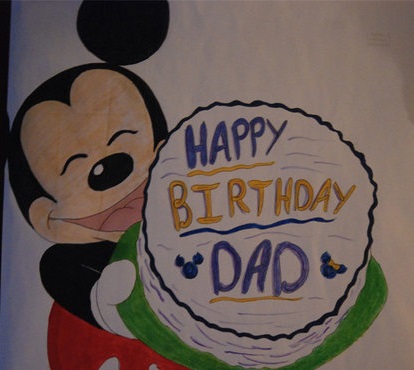
Today, Atharv wishing his Super Daddy a Super Birthday!

n

Mom asked me – “What are the 3 best things about daddy?”

I thought and thought like a Great Scientist, yet, I could not think of three great things about daddy.

a

O, I don’t mean that my daddy is not great. I mean that I cannot list ‘JUST’ three great qualities of daddy because everything about him is so
b

c

And I want to tell the world that if they try to mess with me, they should know that I am your son. I will just give them one look:

d

e

and I am his Super-son!!!

f

Hey Super Dad, I also want to tell you that – When it time to glide to the moon and stars, You are my

g

I feel safe, cuddly and protected in your loving arms.

&

Did you know that you are a natural

h

You just know how to make me laugh and giggle. The faces you make, things you say and silly acts you do are so funny. I know you will do anything to get a smile on my face.

i

I love your Tight, Cozy Hugs Dad

j

And Your

k

And it is so much fun to be riding on you “Tik tik tik”

l

You are ‘THE PERFECT PAPA’ and I am the ‘LUCKIEST’ of all to have the ‘PERFECT PARENTS’.

Love You to the Moon and Back Pappa and Mumma!

m

-Your Atharv

o

hb

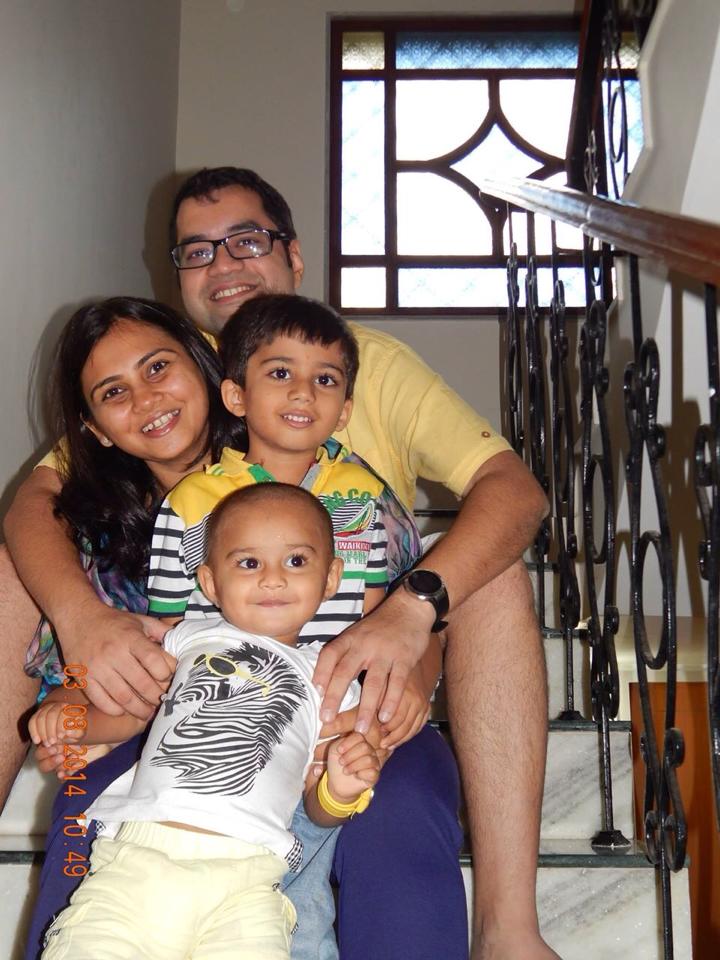
DADDY, FROM ALL OF US

p

Standard
Young Dad Appreciation of the Month

Mayur Chheda ~ September 2015

~ This post is brought to You by Rima Desai. All rights reserved. You may also read this post on my fb page: Parenting Booth: https://www.facebook.com/parentingbooth ~

mayur chheda

Dearest Dad, on your birthday we wanted you to know that you are

 super dad

We know that your age is

years

rt

 Well, whatever, we think you are 41 so you are!!

Dad, you are special in so many ways! We love it when you:

– Give us a bath

– Drop us daily to

school

and the Sundays we spend with you because

You take us

swim ,

 to the MALL

and

Fly helicopter in the garden

Today is the day to tell you that we LOVE all the fun things you do with us.

…And Dad… who can be a better

magic2?!

 You gets books, chocolates and toys for our stomach!! Ha ha.

HB

You are the greatest!!

(Even though you cannot cook or clean like Mom!!!)

h

mayur 3 mayur chheda2

Standard